A Ceramic Artist's Mini-Site: Available Pieces and Made-to-Order Sets
By BotMarketing.pro published updated
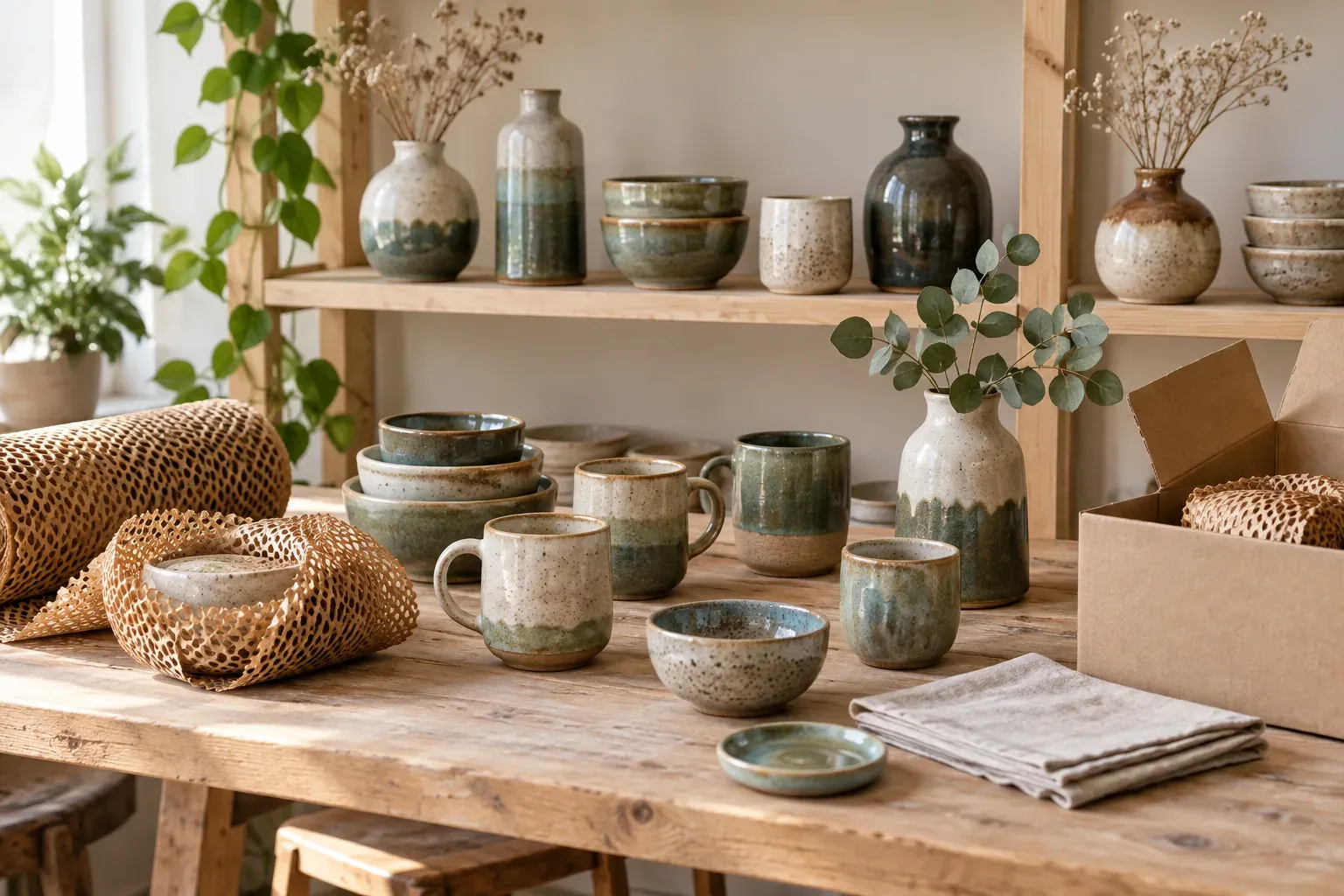
A photograph shows a vase with green glaze runs, but the artist has already sold it at a market. Another customer wants four matching bowls by a gift deadline. A useful ceramics storefront needs to answer both questions: can the buyer receive the pictured piece now, and what can the studio promise about a new batch?
BotMarketing's mini-site brings current work into one public catalogue and directs customers to Telegram. Here is how to use it for one-off pieces and made-to-order sets, including descriptions of variation, order handling, fragile shipping and a relevant follow-up when a collection returns.
Make current availability visible on the mini-site
The mini-site is a public company page with a description, catalogue and links to Telegram. Add your studio description, contacts and handover arrangements, then create goods categories such as “Available now” and “Made to order”. Give each active item a cover photograph, additional views, price, dimensions and intended use. That information appears on the public storefront and in the bot's catalogue.
For a unique piece, photograph the actual object: overall form, underside, rim and scale beside a ruler. For a repeatable form, show several examples from the range so the buyer can see glaze variation. State whether the photograph shows the item they will receive or an example of future work.
Give a single finished vase stock 1 and enable ordering. At stock 0, ordering actions are hidden. If it sells at a market or studio visit, update BotMarketing before accepting another online order. Keep sold work as an explicitly labelled example with ordering disabled, or deactivate it; it should not look available.
Use the verified public-page link in your social profile and on a market takeaway card. Customers can return to current stock without finding the original collection post.
Two descriptions: the pictured vase and a new set
These examples describe a fictional studio. Prices, dimensions and dates illustrate the process; the maker must establish their own figures from finished work and workshop capacity.
V18: the buyer receives this particular vase
V18 green vase — one available. Height 18 cm, maximum diameter 12 cm. Stoneware with a glossy glaze. You will receive the vase photographed in this listing, including its individual glaze pattern. Intended as a decorative piece; water use follows the studio's verified care instructions. $72 including protective packaging; shipping quoted separately. Collection by arrangement, or dispatch after the address and payment are confirmed.
In BotMarketing this is a goods item priced at $72 with stock 1. An enquiry for “another exactly like it” goes to support: the photograph of a finished piece does not establish what the next firing will produce.
B13: four bowls made to an agreed example
B13, four bowls — made to order, with no finished set in stock. Each bowl 13–14 cm in diameter and approximately 6 cm high. Cream glaze with an olive band. Photos show examples, not the future pieces. Small differences in shape within the stated dimensions, shade and band placement are expected; an identical pattern is not promised. Chips and cracks are not accepted variation. Four bowls at $38 each: $152 including protective packaging, shipping separate. Production availability and dispatch date will be confirmed after your enquiry.
You can display this priced example in the made-to-order category with ordering disabled until capacity is agreed. BotMarketing requires a price for a goods item. If the form or price is still unknown, keep the example in your own portfolio, link to it from the company description and start the quote through support. Do not create a $0 checkout to collect an enquiry.
“Handmade variation” needs an explanation of what can differ and by how much, supported by photos of several examples. Claims about food use, dishwashers, microwaves or ovens need evidence for the specific clay body, glaze and process. A glazed appearance alone does not establish suitability.
Handle the purchase and enquiry in BotMarketing
- Send a ready-made buyer from the storefront to the order. With the company bot connected, ordering enabled and positive stock, the public item card offers a Telegram ordering link. The customer opens the piece, adds it to the basket and checks out. Find the order in the orders area, verify V18 and the payment and handover arrangements, then reply through the order conversation.
- Receive the made-to-order request through support first. Ask in B13's description for the reference, quantity, intended use, preferred arrival date, destination and acceptable changes to the example. The customer sends this through bot or Mini App support. Open the enquiry in the requests area, assess the work and reply there. This is a conversation, not an automatically generated kiln production brief.
- Create the precise set after acceptance. Confirm four bowls, dimensional range, glaze examples, price and dispatch date in one message. Once the customer agrees, create a separate goods item for the complete set at $152, using the approved reference. Enable ordering and direct the customer to it. Limit availability to one set and disable ordering after checkout; the item is not a private listing. Keep the approval reference in the order's internal note. This availability limits order intake; it does not mean the bowls are already fired.
- Manage production and handover yourself. Use built-in order statuses for the actual handling stage, and mark payment after checking receipt. Send firing, packing and dispatch updates through the order conversation. If the batch outcome or timeline changes, obtain a new agreement before substituting pieces or shipping a partial set.
Goods stock decreases when an order is created, before payment. Opening a New order with management access changes it to Processing; that status does not establish a successful firing. The maker manages kiln capacity and production documents, while support enquiries do not automatically become orders. Check employee permissions and subscription access before launching these routes.
Agree timing, packaging and delivery together
“Finished Friday” is not enough for a customer who needs a gift on Saturday. Production, packing, carrier handover and arrival take separate time. Settle these five points before the B13 order:
- The complete set. Four bowls, the accepted example and variation limits; how you inspect the batch and what you will propose if too few pieces pass.
- Dates. Expected completion, dispatch or collection window, required arrival date and a time allowance. A carrier estimate is not a studio guarantee.
- Handover costs. Protective packaging, shipping quote and payer, plus how the full amount is agreed. For cross-border work, check supported destinations and explain any known customs responsibilities separately.
- Packing. Protect individual pieces, separate them and prevent movement in the carton. Match the packing method to shape, weight and carrier requirements; a gift box alone is not protective shipping packaging.
- Receipt and problems. Contact, address or collection point, inspection instructions and how to report damage. Ask the customer to retain the packaging and photographs while you investigate, without promising an automatic outcome from one image.
If only three of four bowls pass inspection after firing, contact the customer before dispatch. Offer the feasible options: wait for a new fourth piece, approve a different set, or resolve cancellation and payments. Record the decision in the order conversation and carry out the agreed payment handling separately. “Pre-order” does not replace payment and cancellation terms.
Golden Ratio Clay Works separates made-to-order information, collection and shipping damage. That is a useful example of the questions to answer; its deadlines and return terms do not become your studio's terms.
A useful follow-up helps the buyer extend a collection
A customer may return for another bowl or a vase in a related glaze. Keep the range reference and accepted specification with the order. Before a repeat purchase, compare the old and new work through photographs and dimensions, especially if the glaze batch has changed.
If the buyer asked to hear about additions to the range, record that preference. In BotMarketing's manual messages area, select that customer's specific chat and send verified availability with the item link:
You asked to hear about additions to B13. Two inspected bowls are ready, 13.5 cm across, with a slightly lighter glaze than the previous batch. Photos and price are in the listing. If you want to extend your set, we can compare the shades first. Tell me if you no longer want these updates and I will stop sending them.
The maker checks recipients and honours opt-outs here. Do not assume an automatic glaze-interest segment or a firing-complete notification. For identifying repeatable variants, see repeat candle orders; for agreeing a batch, see custom souvenir orders.