Custom Knitting Orders: Measurements, Yarn and Approved Changes
By BotMarketing.pro published updated
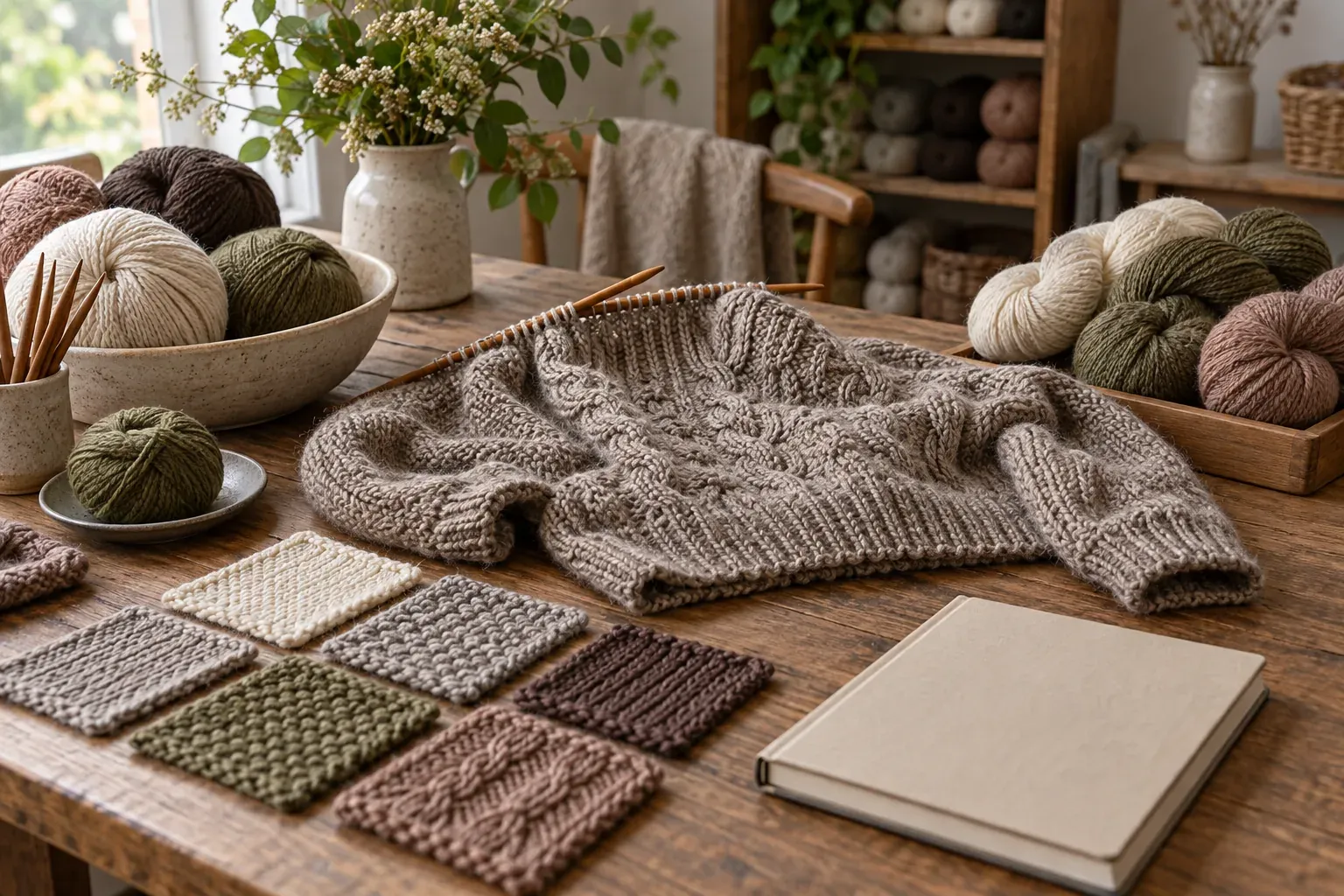
A customer sends a sweater photograph and asks for the same shape with a longer body. Before buying yarn, you still need to agree on fit, finished dimensions, material, price and the date they need it. A reference image cannot settle those details.
Use the brief and approved-order example below to establish one current specification, then use BotMarketing to receive the enquiry, place the agreed order and keep its reference with the customer conversation. A later request becomes an explicit revision rather than an instruction hidden several messages back.
Separate body measurements from finished garment dimensions
A 96 cm body chest measurement does not prescribe a 96 cm sweater. In the fictional example below, the customer and maker choose 8 cm of positive ease: 96 + 8 = 104 cm finished chest circumference, or 52 cm across the garment laid flat. That is their chosen fit, not a universal ease recommendation.
The Craft Yarn Council distinguishes body measurements from finished garment dimensions. Record the units, measuring method and intended fit. An underarm-to-cuff measurement is different from centre-back-neck to wrist. If the customer measures a sweater they already own, label those numbers as garment dimensions. International size labels such as M or L are insufficient for an individual commission.
| Decision | Customer provides | Maker confirms |
|---|---|---|
| Design and fit | Garment type, reference image, close or relaxed fit | Construction, stitch pattern, neckline and feasible reference details |
| Body measurements | Chest and other measurements needed for the design, with units and method | Any missing or ambiguous measurement before quoting |
| Finished dimensions | Desired length, width and sleeve length; measurements of a reference garment if used | Circumference versus flat width, and the start and end points for each length |
| Yarn and colour | Fibre, colour and feel preferences; materials to avoid | Yarn name, labelled fibre content, colour, available quantity and lot reference |
| Details and care | Buttons, pockets and care preferences | Feasible details and care instructions for the chosen yarn |
| Budget | Spending limit and currency | Material, labour, additional services and total price |
| Timing and delivery | Required arrival date, destination and collection or shipping preference | Completion date, handover method and separate shipping arrangements |
This is a brief to copy into a conversation, not a built-in measurement form. Ask for clarification before calculating: “Is 60 cm the length you want, measured from the shoulder to the hem, or the length of your current sweater?” For international orders, agree on one unit system and distinguish dispatch from arrival.
Check the yarn and swatch before approving the specification
Work a swatch in the proposed yarn and pattern before committing to dimensions and yarn requirements. Brooklyn Tweed explains measuring gauge after the intended blocking treatment and matching the swatching method to the project. Your flat-knitting gauge may differ from your gauge in the round. Keep the measured result and treatment notes so a later length change can be assessed against the same assumptions.
Record the specific yarn, labelled composition and colour, verify quantity with the supplier, and retain the lot reference from the labels. A screen colour is only a guide. If the selected yarn is unavailable, obtain approval for a substitute and a revised quotation before purchasing it.
Approved order K17, version 1
The following measurements, prices and dates are fictional examples of a recorded agreement.
K17 v1 — crew-neck sweater in the agreed stitch pattern. Body chest: 96 cm. Finished garment: 104 cm chest circumference, 52 cm laid-flat width, 60 cm shoulder-to-hem length, 44 cm underarm-to-cuff sleeve.
Material: Yarn A, 100% wool according to its label, olive colour, lot P17; required quantity checked by the maker. Swatch S17 after the agreed treatment: 20 stitches × 28 rows per 10 × 10 cm; treatment recorded separately.
Price: materials $80 + labour $160 = $240, quoted in USD. Local collection included. Ready on 24 October; collection time to be agreed.
Payment: $80 before purchasing yarn, $160 before handover. Cancellation and change terms agreed separately before payment. Customer approval: “K17 v1: dimensions, material, price and completion date approved.”
The card summarises the decision; it does not replace the complete terms. Keep measuring instructions, photos, care and cancellation arrangements in the conversation or a document accessible to the customer, referenced by the card. Decide where that document lives and which version is current.
Use BotMarketing to connect the enquiry, agreement and order
- Give customers an enquiry route. Describe your commissions and the information needed for a quotation in the company description, with a link to your portfolio. The customer sends the written brief through support in the connected Telegram bot or Mini App. The maker handles it in customer requests and asks for missing measurements. Catalogue goods require a price, so begin an unpriced commission as an enquiry.
- Obtain explicit approval. Calculate the yarn, labour and timing yourself, then send K17 v1 for confirmation. BotMarketing does not take measurements or calculate knitting gauge or yarn consumption. Keep a long specification in a separate document and send its reference and link in the conversation.
- Create a goods item for the accepted commission. Set the exact $240 price and describe the agreed version, then enable ordering and availability for one order. The customer opens the item in the bot or Mini App, adds it to the cart and enters “K17 v1 approved” in the checkout comment. Catalogue items are not private: omit personal measurements from the listing. State clearly that this is a commission awaiting production.
- Keep the accepted version with the order. In order management, check the total and customer comment. Add the K17 v1 reference and full-specification link to the internal note; confirm acceptance through the order conversation. Record payment only after checking that funds actually arrived. A deposit agreement is not payment confirmation.
- Report progress when it happens. Purchasing, swatching, knitting and fittings remain the maker’s work; send updates through messages. BotMarketing order statuses do not schedule production. Goods stock decreases when an order is created, so review availability and your capacity manually. That stock figure does not reserve yarn with a supplier.
Check the bot connection, staff permissions and relevant subscription features before offering this route. The checkout comment allows 1,000 characters: use it for the approved-version reference rather than the full specification.
A change after yarn purchase needs a revised agreement
Before accepting an extra five centimetres, check additional yarn, availability and whether work must be undone. Assess the change before proceeding. A customer’s request alone does not approve its cost or a later completion date.
A message proposing K17 version 2
“You requested a body length change from 60 to 65 cm. Additional yarn costs $18 and the extra work costs $30. The revised total is $240 + $18 + $30 = $288. With your $80 deposit already received, the balance would be $208. Completion moves from 24 to 27 October. Chest and sleeve dimensions remain unchanged. Please confirm ‘K17 v2: 65 cm length, $288 total, ready 27 October’ if you accept. Until then, v1 remains the approved specification; we can agree a pause separately.”
After approval, make v2 the current specification, retain the v1 acceptance and record why it changed. A note or message in BotMarketing does not alter an existing order total. Agree and account for the additional payment separately; avoid creating a second full-price order that could duplicate the charge. If the customer declines, discuss retaining v1 or cancellation under the previously agreed terms.
Before handover, compare the finished garment after the agreed treatment with the accepted dimensions and provide care instructions for the actual yarn. For another commission, ask the customer to reconfirm measurements and fit. The previous card is a starting point, not renewed approval.
Related workflows cover ready-made jewellery versus individual commissions and custom baking briefs with dates and handover arrangements. Knitting adds the separate body and garment measurements, swatch and yarn specification.